How well is your organization prepared to respond to a cyberattack? According to PwC's 2026 Global Digital Trust Insights, only 6% of organizations worldwide feel fully confident they can withstand cyberattacks across every vulnerability category surveyed, and even fewer companies are sure if their playbooks can perform well.
Cybersecurity skills can't be taught overnight, but there is a solution that can effectively help organizations increase their level of preparedness for potential cyber threats and attacks through the power of a cyber range.
In this article, we dive deep into this topic and talk about what a cyber range is, why they are important, and the benefits of utilizing this technology to ensure your organization's security.
What Is a Cyber Range?
Simply put, a cyber range is a simulated environment that organizations use to train cybersecurity professionals and test their incident response capabilities. Cyber ranges typically include simulated network infrastructure, tools, and systems so teams can rehearse against realistic threats without touching production.
The goal of a cyber range is to provide a safe environment and help organizations gain hands-on skills for security posture testing.
The majority of cyber ranges feature a virtualization layer, as well as network and computing infrastructure. A range can virtualize a wide variety of environments, letting participants practise in conditions that mirror the systems they defend day to day.
One of the biggest benefits of a cyber range is that it is an interactive, simulated representation of real networks, systems, and applications — which is what makes it so effective for cybersecurity education, training, and certification.
Inside a Cyber Range
Beneath the surface, most ranges share the same building blocks:
- Environments — virtualized, network-isolated replicas of IT, cloud, or OT/ICS systems. Depending on fidelity, these range from lightweight simulations, to emulations that run real operating systems and services, to high-fidelity digital twins of a specific production estate.
- Scenarios — authored storylines that define the topology, vulnerabilities, and objectives, then deploy on demand and reset to a clean state between runs via snapshots.
- Activity generation — automated benign user traffic plus scripted or automated adversary actions, so defenders face a live, noisy environment rather than a static lab.
- Telemetry and scoring — logs, detections, and actions are collected and scored, feeding dashboards, replay, and after-action review.
- Exercise control — instructor tooling to inject events, adjust difficulty, and monitor teams in real time.
- Integrations — teams can run the security tools they already use, such as SIEM, SOAR, and EDR, inside the environment, with connectivity to identity (SSO), learning platforms (LMS), and a REST API.
Five Ways Security Teams Put Cyber Ranges to Work
Cyber ranges offer several use cases for organizations around the world — from training and assessing an existing team and building an internal team for a large enterprise, to developing the next generation of cybersecurity talent. The most valuable applications fall into five distinct categories.
1. Train hands-on, without touching production
A cyber range provides a highly controlled virtual environment where organizations can reuse and replicate training modules at any time, without having a major impact on their live networks and systems. Team members can experiment and learn how to leverage new tools to improve their skill set, which results in more hands-on training and a deeper level of understanding across the team. Cyber-range training can also be mapped to external frameworks such as the NICE Workforce Framework for Cybersecurity, helping organizations align exercises with specific roles, tasks, knowledge, and skills.
2. Assess your team's skills — and vet new hires
A cyber range is a great tool to train and assess the skills of your employees. It can help you understand the level of your team's knowledge and address skills-development needs where necessary. You can also use it to assess potential hires and confirm they have the knowledge and experience to tackle real cybersecurity challenges at work.
3. Rehearse incident response as a team
Cyber ranges let organizations practise team collaboration in simulated cyberattack scenarios — an ideal setting for members to apply their individual skills in a team context. Cybersecurity should be a collaborative effort, and these exercises help raise that awareness across the organization. Companies can run live team exercises where participants work a cyber incident together — for example, a Red vs Blue exercise, where a defending blue team faces an attacking red team under automated attack scenarios.
4. Validate your security tooling and playbooks
A cyber range helps organizations better optimize their security processes and technology stack. Security-stack validation can be challenging; verifying it in a cyber range lets you test and adjust processes such as incident response plans and strengthen your organization's readiness. Ranges also let you replicate and recreate different attack scenarios — it is very useful to simulate the scenarios your infrastructure could actually face. During those simulations, your security team can practise their incident response playbooks and test how effective their reactions are, then adjust protocols to improve.
5. Build readiness from the SOC to the boardroom
A cyber range helps organizations increase overall enterprise readiness for potential cyber threats and attacks. Every employee plays a role in maintaining a company's cybersecurity level, and the skills they build on a range feed a proper process for responding to cyber incidents. Company executives also get to practise the strategic and operational decisions that shape the organization's response — risk acceptance, escalation, crisis communications, regulatory notification, and resource allocation — improving coordination when a real incident hits.
Not All Cyber Ranges Are Alike
"Cyber range" is a broad term, and the types differ along a few axes that matter before you compare vendors. Knowing which kind you actually need is the first decision:
- Hosting model — cloud, on-premises, or hybrid.
- Ownership — cyber-range-as-a-service versus an owned, in-house capability.
- Domain — IT, OT/ICS, cloud, telecom, space, or cross-domain environments.
- Fidelity — simulation-based environments versus emulation-based environments and high-fidelity digital twins of a real estate.
- Access — public, private, shared, or federated (multi-organization) ranges.
- Primary purpose — training and workforce development versus testing and validation of technology and processes.
Many organizations combine several of these — for example, a hybrid-hosted, emulation-based IT range delivered as a service for training, alongside a higher-fidelity OT digital twin for validation.
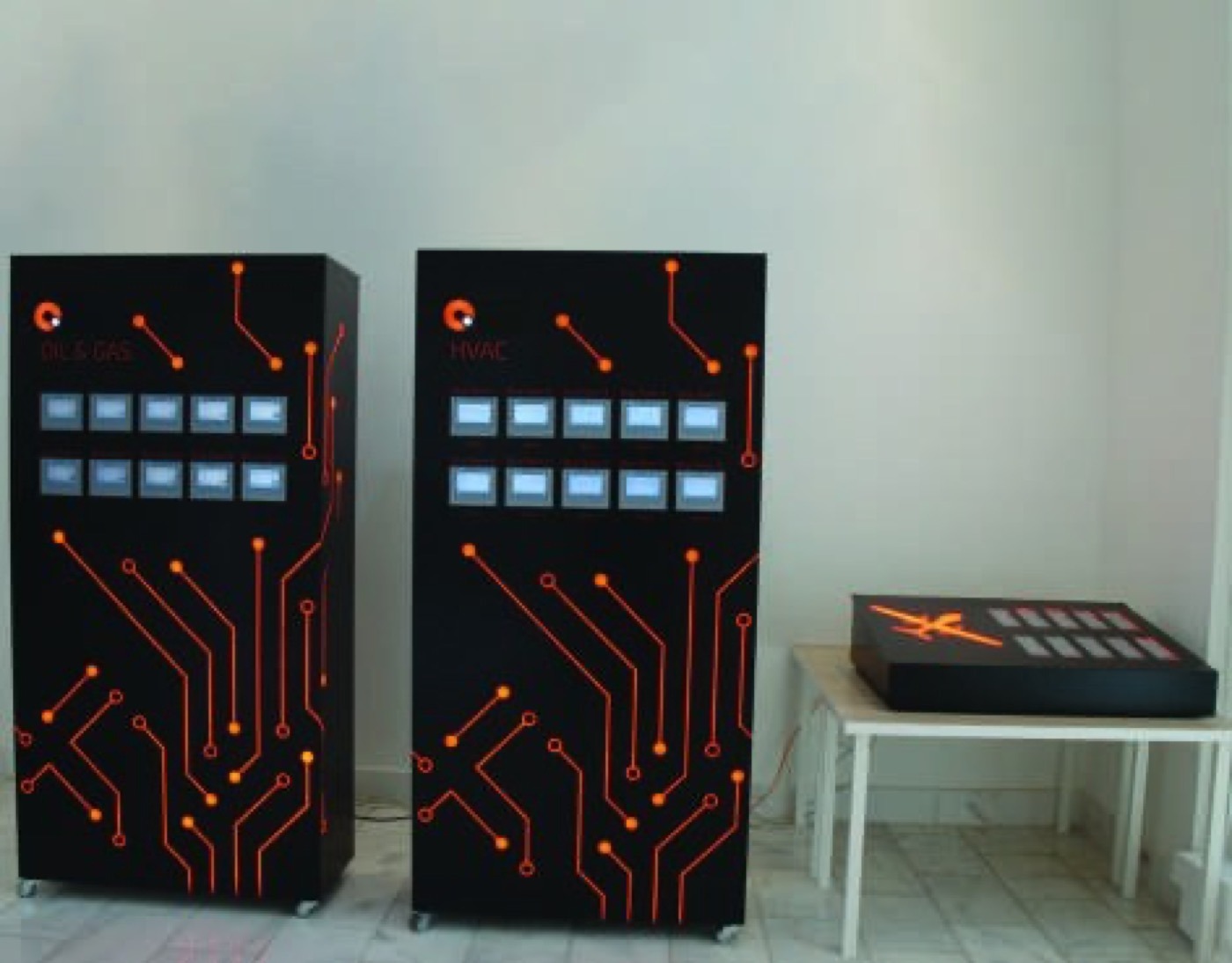
OT/ICS ranges reproduce real industrial control systems and protocols, so teams can rehearse attacks and responses without endangering physical processes.
What Types of Cyber Range Exercises Are There?
When it comes to improving your security posture, there is no one-size-fits-all solution — so ranges support different types of exercises that fit the specific needs of a particular organization. The most common are:
- Live-fire exercise — designed to help cybersecurity professionals practise defending against real-world threats and attacks. Built around Red vs Blue elements, its aim is to give teams a realistic taste of defending IT systems under intense attack.
- Threat-hunting exercise — a team of experts works in a simulated environment to find and stop pre-planned threats. Think of it as detectives searching a crime scene — here, the analysts hunt for clues such as malware or the actions of attackers trying to steal information.
- Capture-the-flag exercise — a competition where participants find and exploit vulnerabilities to "capture" a hidden piece of data or code. It usually involves multiple teams competing to capture as many flags as possible within a set time, coordinating strategy to reach their goals.
What Kinds of Organizations Need a Cyber Range?
Government and military organizations were the first to use cyber ranges to imitate real-world scenarios and train for effective responses against cyberattacks. As the world became more digital and threats grew more frequent, a much broader range of businesses now use cyber ranges to train their staff and prepare for what's ahead. Common users include:
- Educators building cybersecurity courses into their curricula.
- Organizations training for security operations and analysis.
- Organizations evaluating candidates for cybersecurity roles.
- Individuals training to join the cybersecurity workforce.
- Organizations testing new products and software releases.
Across industries, the same need shows up wherever a breach carries real operational, financial, or safety consequences — including financial services, energy and utilities, healthcare, telecommunications, managed security service providers (MSSPs), enterprise SOC teams, software and security-product vendors, and critical-infrastructure and industrial (OT/ICS) operators.
Cyber Ranges in High-Stakes Domains
Cyber range technology has proven useful across many industries. As threats evolve, few sectors remain out of attackers' reach, and continuous, realistic cyber training is what helps an organization enhance its preparedness and security posture. Some of the verticals where realistic training is especially critical:
Space Cyber Range
Everyday life is increasingly dependent on space-based technologies such as satellites and other critical infrastructure. That dependence is driving rapid growth in an industry Morgan Stanley estimates could reach $1 trillion by 2040. With that growth comes a real challenge: understanding how to approach cybersecurity in space and what the associated risks are.
It is important to test and validate space-based assets before deployment to identify vulnerabilities and assure the security of deployed solutions. A Space Cyber Range gives organizations a purpose-built environment to learn about the risks, test and validate their technology, and optimize their processes. Read more about the Space Cyber Range.

A space cyber range models satellites, ground segments, and the links between them — a place to validate space-based assets before they ever launch.
Smart City Cyber Range
The smart city promises improved transportation, less pollution, better security, and well-built infrastructure. But governments and smart-city solution providers face a constant threat of attack that could compromise vital services or expose data. This is where a Smart City Cyber Range helps.
A Smart City Cyber Range is a simulated environment that replicates the technologies, systems, and tools used in smart cities, giving administrators and security experts a secure, isolated environment to safely explore this complex landscape. Read more about the Smart City Cyber Range.
Cyber Warfare Training Solutions
A cyber warfare training system is a safe, controlled environment where military organizations can train personnel, improve skills, and prepare for cyber conflict. It provides a simulated environment that closely mirrors real-world networks and hardware, giving personnel a controlled setting to practise incident response and offensive techniques.
A cyber warfare training system also helps decision-makers assess their current technologies and judge whether to update or retain them. Governments often need to validate and update cyber warfare policies through practical testing, and to make rapid decisions under pressure — a crucial skill in a fast-moving domain. It is also an efficient way to train personnel and build skills without the risks of real-world operations. Read more about the Cyber Warfare Range
Cyber Ranges for Academic Purposes
Cyber ranges are also transforming how academic institutions teach cybersecurity. By simulating real-world attack scenarios, they give learners their first taste of what an actual cyberattack looks like and how to mitigate one in a timely way. Combining existing course materials with realistic exercises keeps students more engaged and builds their cyber resilience. Read more about cyber ranges for universities
How to Choose a Cyber Range
When choosing the cyber range partner that fits your organization, keep several factors in mind. First, identify your business requirements and the ideal outcome: what should participants learn and prepare for, and which technologies need to be involved? Then find the balance between cyber range features and capacity — the use cases you need will tell you whether integration with external systems is required. Next, determine the hosting and licensing model that best fits your needs, and whether you want a cyber-range-as-a-service or an in-house capability. Scalability matters too: ranges rely on virtualization and an orchestration layer to map complex training environments into virtual machines. With those details settled, you can set a budget and choose the partner that suits you best.
To make that concrete, the checklist below turns those categories into questions worth asking any vendor:
- Fidelity & scope — required environment fidelity; supported operating systems, cloud platforms, and OT protocols.
- Content — scenario-authoring and customization; automated attack and benign-traffic generation; content updates and threat-intelligence alignment.
- Integration — running the SIEM, SOAR, and EDR tools teams use inside the range, plus identity (SSO), LMS, and REST API connectivity.
- Delivery of exercises — instructor dashboards and exercise control; scoring, telemetry, replay, and after-action reporting.
- Scale & multi-tenancy — concurrent users and environment provisioning time; team separation.
- Governance — data residency, access control, and audit logging; platform security and isolation assurances.
- Access — remote-participation and accessibility support.
- Support & cost — instructor and platform support; total cost of ownership, not just licence price.
Proving It Worked: How to Measure Outcomes
A range is only worth what you can measure from it. Two frameworks are often confused: the NICE framework maps workforce roles and competencies (useful for individual and team development), while the NIST Cybersecurity Framework describes organizational capability (useful for resilience goals). Keep the two distinct, and set objectives against the right one.
Across an exercise, useful metrics include:
- Detection & response: time to detect, time to contain, detection coverage, escalation accuracy, and false-positive handling.
- Process: playbook adherence and the quality of recovery decisions.
- Team: coordination and communication quality.
- Trajectory: measurable improvement between repeated exercises — one of the clearest signals that training is working.
How CybExer Technologies Can Help
At CybExer, we have been shaping this industry since 2016. We are committed to providing organizations worldwide with advanced cyber range technology and helping them prepare for the challenges ahead. Our platform offers a wide range of advanced training modules designed to enhance the cyber capabilities of organizations at a global scale. To see how it fits your needs, schedule a call with our cyber range experts.