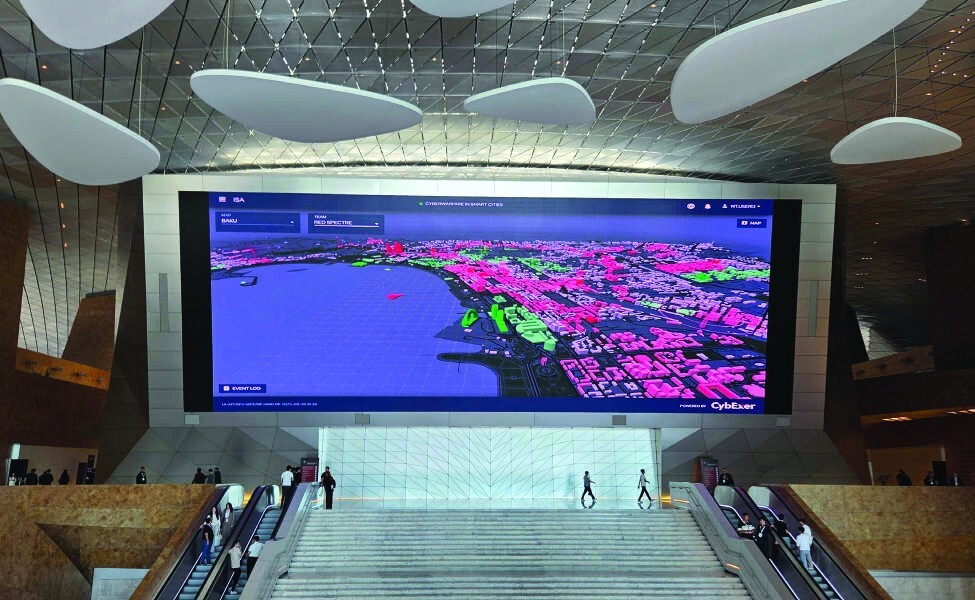
The passage of Japan’s Active Cyber Defence Bill reflects a broader shift towards closer cooperation between government, industry and research institutions. As threats to digital and operational infrastructure grow, organisations need testing environments that are realistic, scalable and grounded in local requirements. The deployment at Keio University shows how CybExer and Cyber Defense Labs are putting that approach into practice by supporting the development of a critical-infrastructure cyber resilience testbed. This case study looks at the deployment and the partnership that made it possible.
Inside the Keio University deployment
In April 2026, CybExer and Cyber Defense Labs (CDLabs) provided technical support to Keio University in establishing an operational technology and information technology cyber resilience test environment. The work sits within a research programme funded by NEDO, Japan’s national research and development agency, under project number JPNP24003, and it is aimed at the critical-infrastructure sectors the country most needs to protect.
The environment is a representative hybrid of OT and IT systems, the mix found in most real infrastructure, brought together from three ingredients: digital-twin models that replicate critical system architectures, the cyber range platform that reproduces and observes attack and defence interactions, and high-fidelity simulators that pair real hardware with attack scenarios.
The choice of a hybrid OT and IT environment is deliberate. Operational technology, the systems that actually run physical infrastructure, increasingly shares networks with ordinary IT, which widens the attack surface, and unlike an IT system an OT process often cannot simply be taken offline and restored. That makes the real question less whether an attack can be blocked than whether essential functions keep running, and recover, when one gets through. It is exactly that question the testbed is built to put to the test.
The method at the centre of the work is dynamic penetration testing. In plain terms, the environment introduces controlled attacks and failures into that OT/IT architecture, then observes how the system degrades and recovers, recording whether essential functions keep running while it is under attack. The two questions it is built to answer are how well a hybrid environment recovers after a failure, and whether it can maintain functionality while an attack is under way.
Because it is a test environment rather than a live network, controlled attacks and failures can be run against it safely, without risk to operational systems. This lets researchers study how infrastructure behaves under conditions that could not safely be created on live systems.
The roles are distinct. Keio University leads the research, NEDO funds the programme, and CybExer and CDLabs provide the technology and technical support that make the testbed possible. The result is a working test environment and a repeatable method for using it, with further deployment planned for power systems and manufacturing operations.
Power systems and manufacturing are natural next steps. Both are priority sectors for Japan, and both combine operational and information technology in the way the testbed is designed to represent, which suggests the same approach can be carried from one sector to the next rather than rebuilt each time.
“Establishing a verification platform designed for real operational environments holds significant meaning for effectively advancing Japan’s cybersecurity policy.”
Jun Murai, Professor Emeritus, Keio University
The partnership that made it possible
The Keio deployment builds on a partnership between CybExer and CDLabs that had been developing for years. Announced on 16 June 2025, the agreement formalised that long-standing collaboration and replaced a previous reseller arrangement with a broader strategic alignment.
The change matters because the successful national deployment of a cyber range takes more than software resale. A range has to be shaped around the people and systems that will use it, supported locally and kept current, which is the kind of sustained commitment a strategic partnership is built for. The sequence since then is straightforward: a strategic partnership in June 2025, technical support to Keio University in April 2026, and planned extensions to power and manufacturing.
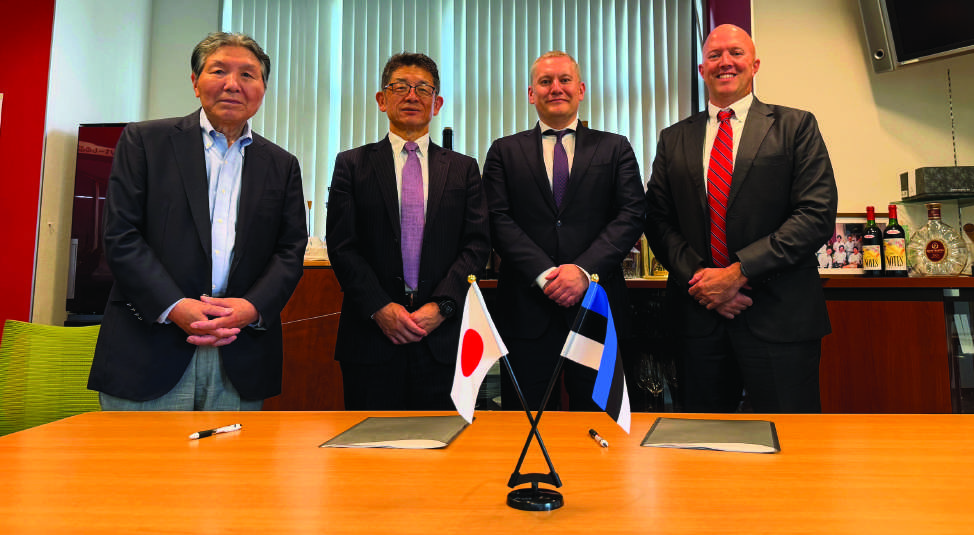
Dr Nobuo Kamata (Soliton Systems and CDL Board), Toru Tsuchiya (CEO, Cyber Defense Labs), Andrus Kivisaar (CEO, CybExer) and Patrick Dempsey (Advisor, CDL).
“Through this initiative, we will contribute to advancing practical cyber exercise environments in Japan.”
Toru Tsuchiya, President and CEO, Cyber Defense Labs
Localisation and the platform behind it
Making the partnership work in Japan meant adapting the platform, not simply reselling it. The most concrete step delivered so far is full Japanese-language support across the user interface, so participants train in their own language rather than adapting to someone else’s. In CybExer’s model, localisation goes beyond translation to fit local operational workflows, regulations and support, and that is the approach the partnership brings to Japan.
The platform behind the partnership is broad. Its capabilities include live-fire simulations, digital-twin based training environments and capture-the-flag scenarios, and it can generate AI-driven attack scenarios for teams to train against. The Keio project drew on the digital-twin, cyber range and simulator capabilities, and the full suite is available to Japanese organisations through the partnership.
Global reach, local relevance
Japan’s move towards active cyber defence is increasing the importance of cooperation between public- and private-sector organisations. Shared, realistic environments for testing resilience can help those organisations develop the skills, procedures and relationships needed to respond together.
CybExer brings experience in large-scale exercises, digital twins and critical-infrastructure simulation from projects in more than 60 countries, including work with NATO and the European Space Agency. The Keio testbed draws on that technical experience, while Cyber Defense Labs contributes the local knowledge, relationships and support needed to adapt it to Japanese organisations and operating conditions.
“We are proud to deepen our collaboration with Cyber Defense Labs and to support Japan in strengthening its national cyber capabilities.”
Andrus Kivisaar, CEO, CybExer
From alignment to national capability
For CybExer and CDLabs, Japan shows a global cyber range capability being adapted to a national context and put to concrete use. In under a year, the partnership has moved from commercial alignment to a working Japanese research deployment, a hybrid OT/IT resilience testbed at Keio University, with power and manufacturing as the next steps. The work is grounded in a real environment, and it gives Japan practical tools for building resilience as its cyber posture shifts towards active defence.